

What Is the Best Time of Day for a Drone Thermal Roof Inspection?
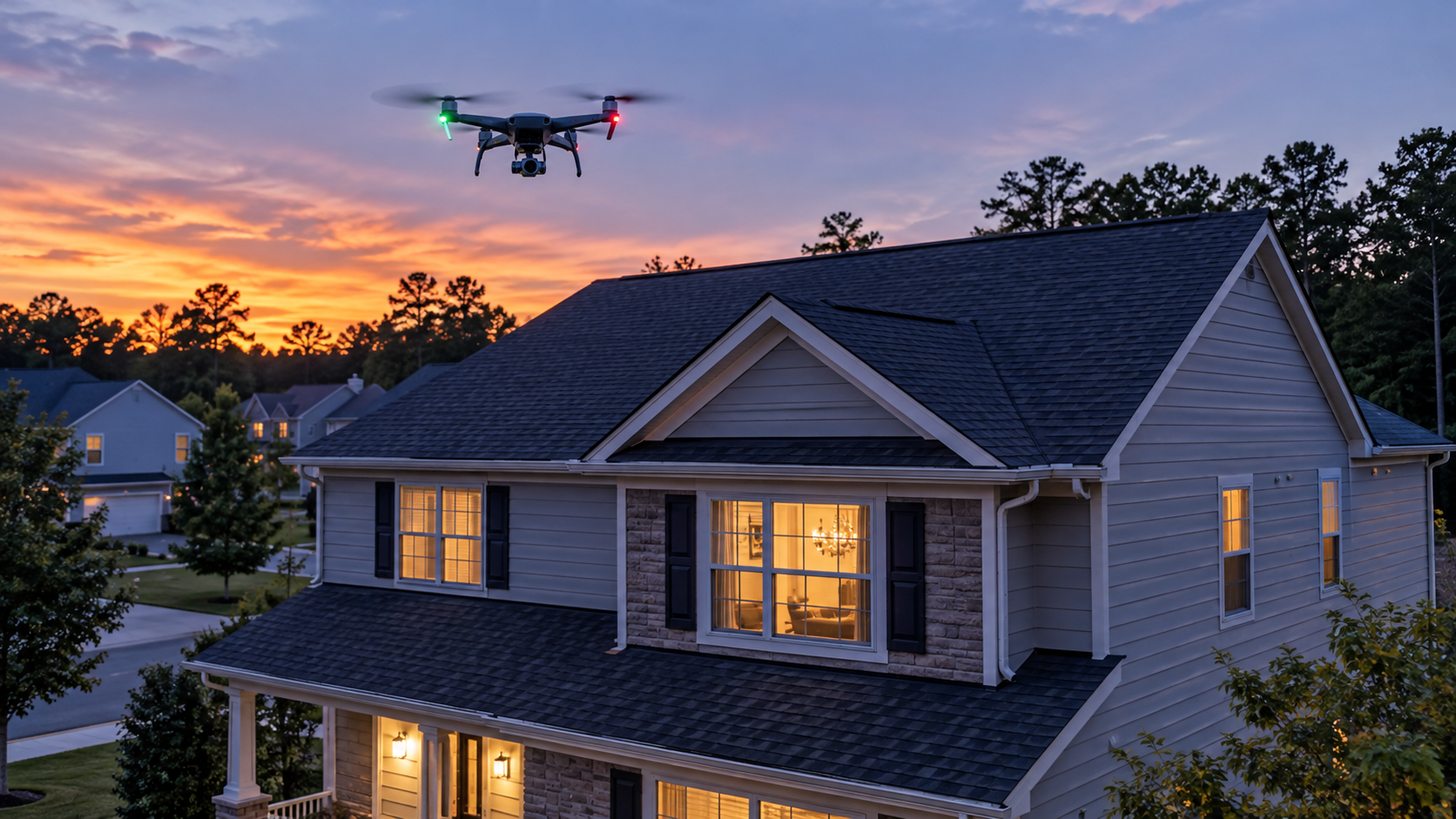
Timing is one of the most important factors determining the quality of a thermal roof inspection.
Surprisingly, the best time is generally not during the middle of the day. For conventional roof-moisture surveys, the most favorable inspection window is usually one to two hours after sunset, following a sunny, relatively warm day.
Here is why.
Throughout the day, the sun heats the roofing materials. Dry areas generally release that accumulated heat at a different rate than areas containing trapped moisture. Wet insulation and other moisture-affected materials may retain heat longer and cool more slowly.
After sunset, these temperature differences can become more noticeable. A thermal camera can capture the resulting patterns and help inspectors identify areas that may contain moisture.
For the best results, inspectors generally look for:
A sunny day before the inspection to allow the roof to absorb sufficient heat.
A clear evening with little or no wind.
A dry roof surface without rain or standing water.
Sufficient temperature variation between daytime and nighttime conditions.
Minimal interference from shadows, nearby structures, and other heat sources.
Wind, clouds, recent rain, and changing weather conditions can reduce the temperature contrast needed for reliable results.
The exact inspection window depends on the roof's construction, materials, and environmental conditions. The inspection should be scheduled around the expected thermal behavior of the particular roofing system rather than following a fixed clock time.